

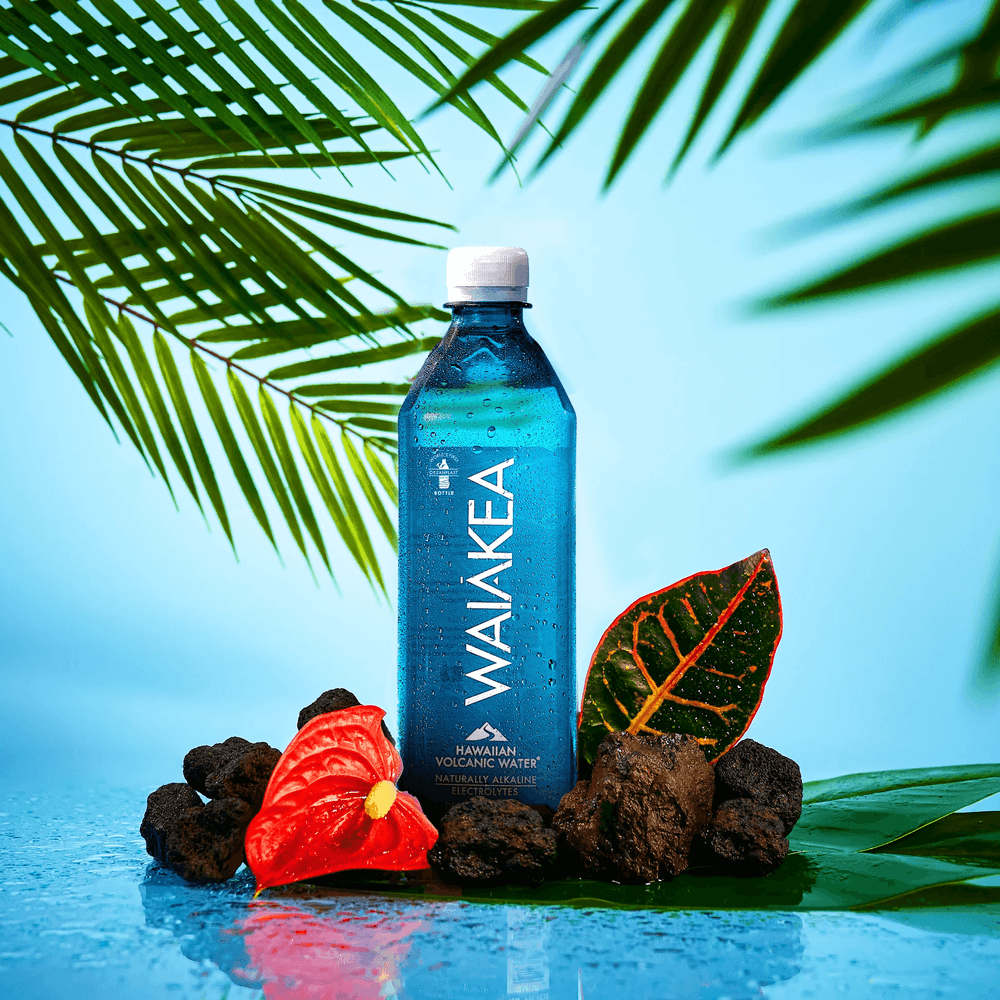
Waiakea Water Lab Results
Lab results show metals and nitrates in Waiakea Volcanic Spring Water.
Waiakea water can meet regulatory limits and still raise questions for daily use when compared against stricter long term health benchmarks. Independent testing found chromium, arsenic and nitrates alongside beneficial minerals, which means the safety question depends on how you interpret those levels, not just the brand’s volcanic origin.
These findings suggest that premium source claims and mineral content do not rule out contaminant exposure. They do not prove every bottle or batch will match the same results, but they highlight why relying on one report or on legal compliance alone can miss long term risk considerations.
Waiakea Water Lab Results
Waiakea is marketed as Hawaiian volcanic spring water with naturally occurring electrolytes. The key issue is not the presence of minerals, but what shows up in full contaminant testing over time.
Independent lab data referenced in this review detected:
- Chromium at 0.0012 mg/L
- Arsenic above common long term health benchmarks
- Nitrates above typical health-based targets
- Fluoride at measurable levels
At the same time, the water contained:
- Calcium
- Magnesium
- Potassium
- Sodium
This confirms that mineral content and contaminants can coexist in the same sample.
Is Waiakea Water Safe to Drink Every Day
Safety depends on which benchmark you use. Legally Required limits define what can be sold, but they are not designed to reflect the lowest possible long term risk.
Does Not Guarantee is the critical distinction. A product can comply with regulations and still exceed more protective targets used by toxicologists and state health agencies for lifetime exposure.
For daily use, that gap matters because small differences in concentration can accumulate over years.
Chromium in Waiakea Water
The reported chromium level was 0.0012 mg/L. That is about 61 times higher than a commonly cited long term health-based target.
Key context:
- Chromium occurs naturally in volcanic rock
- Risk depends on chemical form
- Hexavalent chromium is more strongly linked to cancer risk
- Trivalent chromium is less concerning and sometimes considered essential in trace amounts
What the test does not show is speciation. Without that breakdown, the result indicates potential concern but not the exact risk level.
Arsenic in Waiakea Water
Arsenic was reported at roughly 14 times a long term health benchmark used in some public health frameworks.
Important details:
- Arsenic is common in groundwater, especially in volcanic regions
- Long term exposure is linked to higher rates of skin, bladder, and lung cancer
- Research also connects arsenic to cardiovascular and developmental effects
Even when below federal limits, elevated levels relative to stricter targets can still matter for daily consumption.
Nitrates in Waiakea Water
Nitrates were reported at about 3 times a health-based guideline.
What to know:
- Nitrates can enter groundwater from fertilizer runoff and septic systems
- High exposure in infants can lead to methemoglobinemia
- Ongoing research explores links to pregnancy and developmental outcomes
Nitrates are rarely part of premium water marketing, but they are relevant for long term exposure.
Fluoride in Waiakea Water
Fluoride is commonly found in volcanic water due to natural leaching from rock.
At different intake levels:
- Low intake supports dental health
- Higher chronic intake has been studied for thyroid effects and skeletal fluorosis
- Some research raises questions about neurodevelopment at elevated exposure
Risk depends on total intake from all sources, not water alone.
Why Volcanic Water Can Still Contain Contaminants
Volcanic origin does not mean contaminant-free. Groundwater moves through layers of rock and soil, dissolving both minerals and unwanted elements.
Default Assumption should not be that volcanic water is inherently cleaner.
Instead, water quality depends on:
- Local geology
- Aquifer composition
- Land use in the surrounding area
- Seasonal recharge patterns
Minerals and Contaminants Can Coexist
Waiakea’s mineral profile can improve taste and perceived quality. That does not offset contaminant exposure.
Best Signal is a full lab panel that includes:
- Heavy metals
- Inorganic contaminants
- Testing date
- Third party verification
Highlighting only minerals can create an incomplete picture.
Why Legal Compliance Is Not the Whole Story
Regulatory limits balance feasibility, treatment capability, and population level policy. They are not always set at the lowest possible risk level.
Legally Required compliance answers whether a product can be sold.
Does Not Guarantee that it meets stricter thresholds some experts use for long term exposure.
For daily drinking water, that difference is often the deciding point.
Can Waiakea Water Change Over Time
Yes. Groundwater chemistry is not fixed.
It can shift due to:
- Rainfall patterns
- Seasonal recharge
- Changes in land use
- Natural geological variation
What To Check is whether a brand publishes frequent, updated testing with full panels, not just a single historical report.
How to Compare Waiakea to Other Bottled Waters
A useful comparison focuses on measurable data, not branding.
Review:
- Arsenic
- Chromium
- Nitrates
- Fluoride
- PFAS if available
- Testing frequency and lab source
Supplemental Feed Allowed does not apply to water, but the lesson is similar. Marketing language can distract from the actual numbers that matter.
Should You Filter Waiakea Water
Filtration can help, but results depend on the system.
Consider:
- Activated carbon for general contaminants
- Reverse osmosis for metals and nitrates
- Tradeoff between removing contaminants and stripping minerals
The right choice depends on whether you prioritize taste, mineral content, or contaminant reduction.
Buyer Checklist
- Look for spring waters with frequent third party testing
- Review full contaminant panels, not just mineral profiles
- Avoid relying on a single historical lab report
- Consider filtration that targets metals and nitrates
- Compare brands using independent lab data
Check the latest on Bottled Water
Find the healthiest bottled water ranked and reviewed using the latest lab data, toxicology, and environmental health research.
References
U.S. Environmental Protection Agency — Chromium in Drinking Water
World Health Organization — Arsenic in Drinking Water
U.S. Environmental Protection Agency — Nitrate and Nitrite in Drinking Water
California OEHHA — Public Health Goals for Drinking Water Contaminants
National Academies of Sciences — Fluoride in Drinking Water: A Scientific Review of EPA Standards
U.S. Geological Survey — Groundwater Quality and Volcanic Regions