

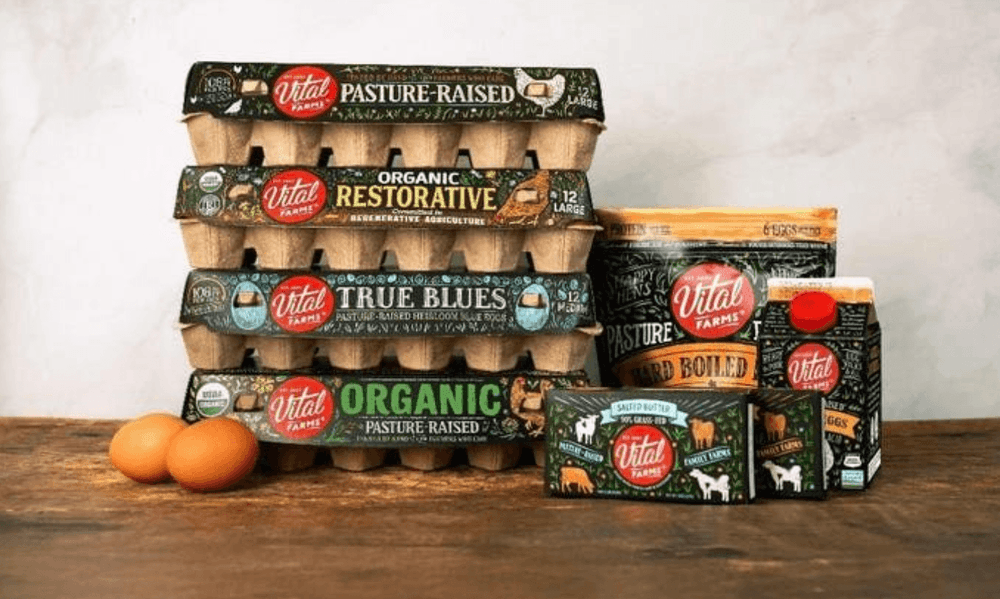
Vital Farms Egg Labels Explained
What the carton claims really mean and how to choose better eggs.
The most useful signal on an egg carton is not the phrase itself, but what it actually commits to. Pasture-raised sounds like a nutritional upgrade, yet the core requirement is outdoor access, not a defined feed or fatty acid outcome, which means two cartons with the same label can differ meaningfully in composition.
That gap matters because labeling reflects standards for animal living conditions, not biochemical targets in the yolk. The research suggests feed is the dominant driver of omega-3 and omega-6 levels, and while pasture access may correlate with better outcomes in some cases, it does not prove them, nor does it guarantee consistency across brands or farms.
Buyer Checklist
- Look for a third-party certification, not just marketing words.
- Check if “pasture-raised” is defined by a specific standard.
- Do not assume pasture means corn-free or soy-free.
- If fats matter to you, look for actual data, not vibes.
What Legally Required Actually Means
Legally Required refers to what a label or certification must promise under regulation or a defined third-party standard.
It Does Not Guarantee what consumers may infer from the wording.
In the United States, there is no formal federal definition for pasture-raised eggs. Most enforceable criteria come from private certifications such as Certified Humane, which focus on welfare conditions rather than nutrition.
What Pasture-Raised Generally Promises
Under leading welfare certifications, pasture-raised systems typically require:
- Outdoor access with minimum space per bird, often around 108 square feet.
- The ability to forage outdoors for grasses and insects.
- Standards for housing, nesting, perches, and flock management.
These standards are audited, but they measure environment and care, not nutrient composition.
What Pasture-Raised Does Not Promise
Pasture-raised labeling does not guarantee:
- Corn-free feed.
- Soy-free feed.
- Grain-free feed.
- A specific omega-6 to omega-3 ratio.
- A minimum omega-3 level unless separately stated.
Under most certifications, Supplemental Feed Allowed means hens still receive formulated feed alongside foraging.
That feed commonly includes corn and soy because they provide consistent energy and protein at scale.
Why Feed Changes Egg Nutrition
Egg composition reflects what the hen eats.
Controlled feeding studies show that altering feed changes yolk fats in predictable ways.
Key findings from poultry science research include:
- Flaxseed or fish oil supplementation can increase omega-3 content by 2 to 3 times or more.
- DHA levels rise significantly when marine or enriched feeds are used.
- Standard grain diets high in linoleic acid tend to increase omega-6 levels in eggs.
A large body of research shows feed composition is the primary lever for changing yolk fatty acids.
Outdoor access alone does not reliably shift the omega-6 to omega-3 ratio without a corresponding change in feed.
Correlation vs Causation in Pasture-Raised Eggs
Pasture-raised systems can sometimes produce eggs with improved nutrient profiles.
The mechanism is not the label itself, but what hens actually consume.
Important distinctions:
- Foraging can introduce grasses and insects that influence nutrients.
- Base feed still dominates total fat intake in most systems.
- Two farms with identical space standards can produce different eggs if feed differs.
The label signals conditions, not outcomes.
It correlates with certain practices but does not establish causation for nutrition.
The Healthy Grocery Shelf Illusion
Shelf placement is influenced by economics as much as quality.
Retail visibility often reflects distribution strategy, not nutritional superiority.
Industry and regulatory discussions highlight:
- Slotting fees paid by brands to secure shelf space.
- Per store and per SKU costs in competitive categories.
- Financial incentives tied to product placement and expansion.
The Default Assumption that the most visible premium brand is nutritionally superior is often untested.
Visibility is a signal of scale and strategy, not necessarily composition.
What To Check on the Carton
If your goal is welfare, nutrition, or both, focus on verifiable details.
Marketing language alone is not enough.
What To Check:
- A named third-party certification with published standards.
- Defined pasture space per bird.
- Any disclosed feed details.
- Measured omega-3 content if relevant to you.
- Farm traceability or audit transparency.
The Best Signal is specific, testable information rather than imagery or positioning.
A Simple Decision Framework
Start by choosing your primary priority.
Then match the carton to that goal using concrete claims.
Common priorities include:
- Outdoor access and audited welfare.
- Lower omega-6 exposure.
- Higher omega-3 content.
- Corn-free or soy-free diets.
- Farm-level transparency.
Evaluate eggs like a researcher.
Compare what is promised, what is measured, and what is implied.
Check the latest on Eggs
Find the healthiest Eggs ranked and reviewed using the latest lab data, toxicology, and environmental health research.
References
Certified Humane — Article Explains Difference: Pasture Raised & Free Range Eggs
USDA Agricultural Marketing Service — Shell Egg Labeling Guidelines
Poultry Science — Effects of Dietary Fat Sources on Egg Yolk Fatty Acid Composition
Federal Trade Commission — Report on the Use of Slotting Allowances in the Retail Grocery Industry