

Parmesan Protein Is Higher Than Chicken By Weight
Parmesan packs protein, calcium, plus K2; choose PDO wedge; watch sodium satfat.
A small sprinkle of Parmesan is often treated like a finishing touch, but the numbers tell a different story. Protein by weight is the hidden variable here, with hard Parmesan delivering more protein per gram than chicken, beef, or tuna, alongside unusually high calcium levels.
That does not automatically make it a high-protein food in practice. The evidence shows it is protein-dense by weight, not by calories, and its sodium and saturated fat concentration mean portions matter, while sourcing standards like Parmigiano Reggiano signal ingredient quality rather than guaranteed health outcomes.
Buyer Checklist
- Look for Parmigiano Reggiano PDO for the strictest traditional standard
- Choose a wedge with rind markings and grate it yourself when possible
- Check the ingredient list for milk, salt, and rennet only
- Compare nutrition labels carefully if buying pre-grated products
- Watch sodium per serving, especially in shelf-stable grated versions
How Much Protein Is in Parmesan?
Hard Parmesan provides about 35.75 grams of protein per 100 grams.
For comparison per 100 grams:
- Roasted chicken breast: 31 grams
- Cooked ground beef: 28.2 grams
- Cooked yellowfin tuna: 29.2 grams
- Raw whole egg: 12.6 grams
By weight, Parmesan contains about 15 percent more protein than chicken breast and roughly 27 percent more than cooked ground beef.
Protein by Weight vs Protein by Calories
Parmesan is not optimized for low-calorie protein intake.
Per 100 grams:
- Hard Parmesan: about 392 calories
- Roasted chicken breast: about 165 calories
Lean meats provide more protein per calorie, while Parmesan functions as a compact, nutrient-dense addition rather than a primary protein source.
Parmesan Nutrition Per Ounce
A standard 28 gram serving provides:
- 10.2 grams protein
- 336 milligrams calcium, about 26 percent of the Daily Value
- 334 milligrams sodium
- 6.4 micrograms selenium, about 12 percent of the Daily Value
- 0.34 micrograms vitamin B12, about 14 percent of the Daily Value
Calcium Density
Hard Parmesan contains approximately 1,184 milligrams of calcium per 100 grams.
That is about 91 percent of the Daily Value, making it one of the most calcium-dense commonly available foods.
Vitamin K2 in Parmesan
Fermented cheeses contain menaquinones, a form of vitamin K known as K2.
Research analyzing cheese composition shows:
- Cheese is a major dietary source of vitamin K2 in Western diets
- Long-chain menaquinones are especially present in aged cheeses
- Vitamin K plays a role in blood clotting and bone-related proteins
The evidence is still evolving on cardiovascular outcomes.
- Some studies suggest links between K2 and reduced vascular calcification
- Clinical trial results are mixed and do not establish causation
Consistency matters if you take medications like warfarin that affect vitamin K pathways.
What “Real Parmesan” Means
In the United States, Parmesan has a federal standard of identity with defined aging and composition rules.
The stricter standard is Parmigiano Reggiano PDO, which requires:
- Only milk, salt, and calf rennet
- Minimum aging of 12 months
- Cows fed mainly local forage with no silage
- Inspection of every wheel by the Consortium
What To Check is the ingredient list and origin labeling, since PDO certification signals adherence to these production rules.
Pre-Grated vs Wedge
Not all Parmesan products are nutritionally equivalent.
Some shelf-stable grated products show:
- Higher carbohydrate content from anti-caking agents
- Very high sodium levels, exceeding 1,800 milligrams per 100 grams in some USDA entries
- Lower protein density compared to aged wedges
A wedge with rind markings is often the Best Signal of authenticity and minimal ingredients.
Sodium and Saturated Fat: What to Watch
Parmesan is concentrated, which includes nutrients and components to limit.
Per 28 gram serving:
- About 334 milligrams sodium
- About 4.2 grams saturated fat
The American Heart Association suggests limiting saturated fat to about 11 to 13 grams per day on a 2,000 calorie diet.
Default Assumption should be that Parmesan is a high-impact food in small portions rather than something to eat freely in large amounts.
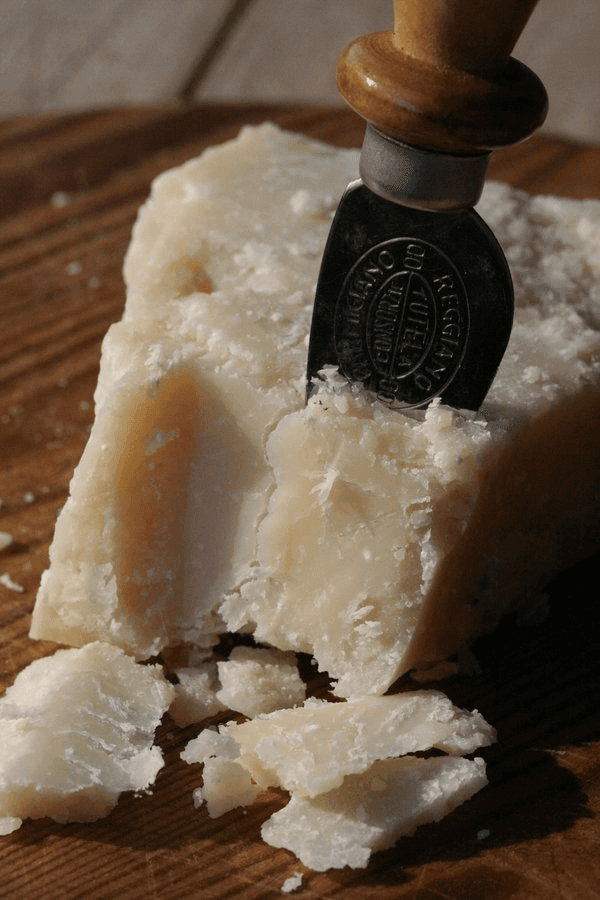
Why Aged Parmesan Has Crunchy Crystals
The small white crystals in aged Parmesan are not spoilage.
They are tyrosine crystals, a naturally occurring amino acid that forms during proper aging and signals maturation and protein breakdown.
Check the latest on parmesan cheese
Find the healthiest parmesan cheese ranked and reviewed using the latest lab data, toxicology, and environmental health research.
References
USDA FoodData Central — Hard Parmesan Nutrition
USDA FoodData Central — Roasted Chicken Breast Nutrition
USDA FoodData Central — Cooked Ground Beef Nutrition
USDA FoodData Central — Raw Egg Nutrition
USDA FoodData Central — Cooked Yellowfin Tuna Nutrition
Parmigiano Reggiano Consortium — Retail Guidelines
Electronic Code of Federal Regulations — 21 CFR 133.165 Parmesan and Reggiano
Journal of Agricultural and Food Chemistry — Menaquinone Content of Cheese
NIH Office of Dietary Supplements — Vitamin K Fact Sheet
Meta-analysis — Vitamin K Supplementation and Vascular Calcification