


Microplastics and PFAS: Health Effects
How microplastics may carry PFAS and disrupt immune and cell signaling.
Microplastics and PFAS Are Not Inert in the Human Body
(What newer systems biology research suggests)
Microplastics and PFAS are no longer discussed only as environmental pollution. They are increasingly studied as exposures that may interact directly with human biology.
Microplastics are small particles that can enter the body through everyday routes like food, water, and indoor air. PFAS are persistent compounds that can remain in blood for years and accumulate with repeated exposure.
This article explains what these exposures are, why combined exposure matters, and what practical steps can reduce your day to day load.
Key Takeaways
- Microplastics and PFAS are increasingly studied as biologically active exposures, not only pollution.
- Evidence suggests microplastics can cross barriers and interact with cellular proteins.
- PFAS can persist for years and accumulate with repeated exposure.
- Combined exposure may increase internal delivery and cellular contact time.
- Reducing exposure is about consistent swaps, not perfection.
Buyer Checklist
- Use glass or stainless steel for food and water storage.
- Reduce non-stick cookware when possible.
- Filter drinking water with third-party tested systems.
- Cut back on plastic-packaged and ultra-processed foods.
- Reduce synthetic fiber exposure by adjusting laundry habits and managing dust.
What Microplastics and PFAS Are
Microplastics:
- Plastic particles smaller than 5 millimeters
- Common sources:
- Packaging
- Textiles
- Food containers
- Filtration systems
PFAS (per- and polyfluoroalkyl substances):
- Industrial compounds designed to resist heat, oil, and water
- Often called “forever chemicals” because they can persist in the body and environment
The Study That Changed How Scientists Talk About Combined Exposure
A 2023 study in Cell Reports examined how combined exposure to microplastics and PFAS could affect molecular systems, using a systems biology approach. The key point is not that these exposures exist, but that they may interact with core cellular coordination pathways.
The study reported changes consistent with disrupted protein networks, including altered protein–protein interactions. In plain terms, that suggests interference with how cells coordinate immune signaling, metabolism, and other regulated processes.
Findings highlighted in this research direction include:
- Microplastics can interact with proteins and cellular pathways
- PFAS can persist and bioaccumulate
- Combined exposure may amplify delivery and retention dynamics
The Real Culprit Is Chronic Low Dose Exposure
Traditional toxicology often emphasizes “the dose makes the poison.” With persistent exposures, duration can matter because the body may not fully clear them between exposures.
PFAS are a clear example of persistence, because they can remain in blood for years and accumulate with repeated exposure.
This is why Default Assumption thinking can fail for modern exposures. Small exposures that repeat can become meaningful if clearance is slow.
What Microplastics Can Do in the Body
For years, microplastics were commonly described as inert particles that pass through. Newer research has challenged that framing by suggesting microplastics can cross barriers and interact with cellular proteins.
Reported findings in the literature include:
- Crossing the intestinal barrier
- Entering the bloodstream
- Accumulating in organs and tissues
- Interacting with cellular proteins
What PFAS Persistence Means for Health
PFAS are defined by carbon–fluorine bonds, which are among the strongest bonds in chemistry. That stability contributes to persistence and accumulation over time.
Properties linked to persistence:
- Do not readily degrade
- Can remain in blood for years
- Can accumulate with repeated exposure
Health associations discussed in major reviews include:
- Immune suppression
- Thyroid hormone disruption
- Elevated cholesterol
- Reduced vaccine response
- Increased cancer risk
How Microplastics Can Act as PFAS Carriers
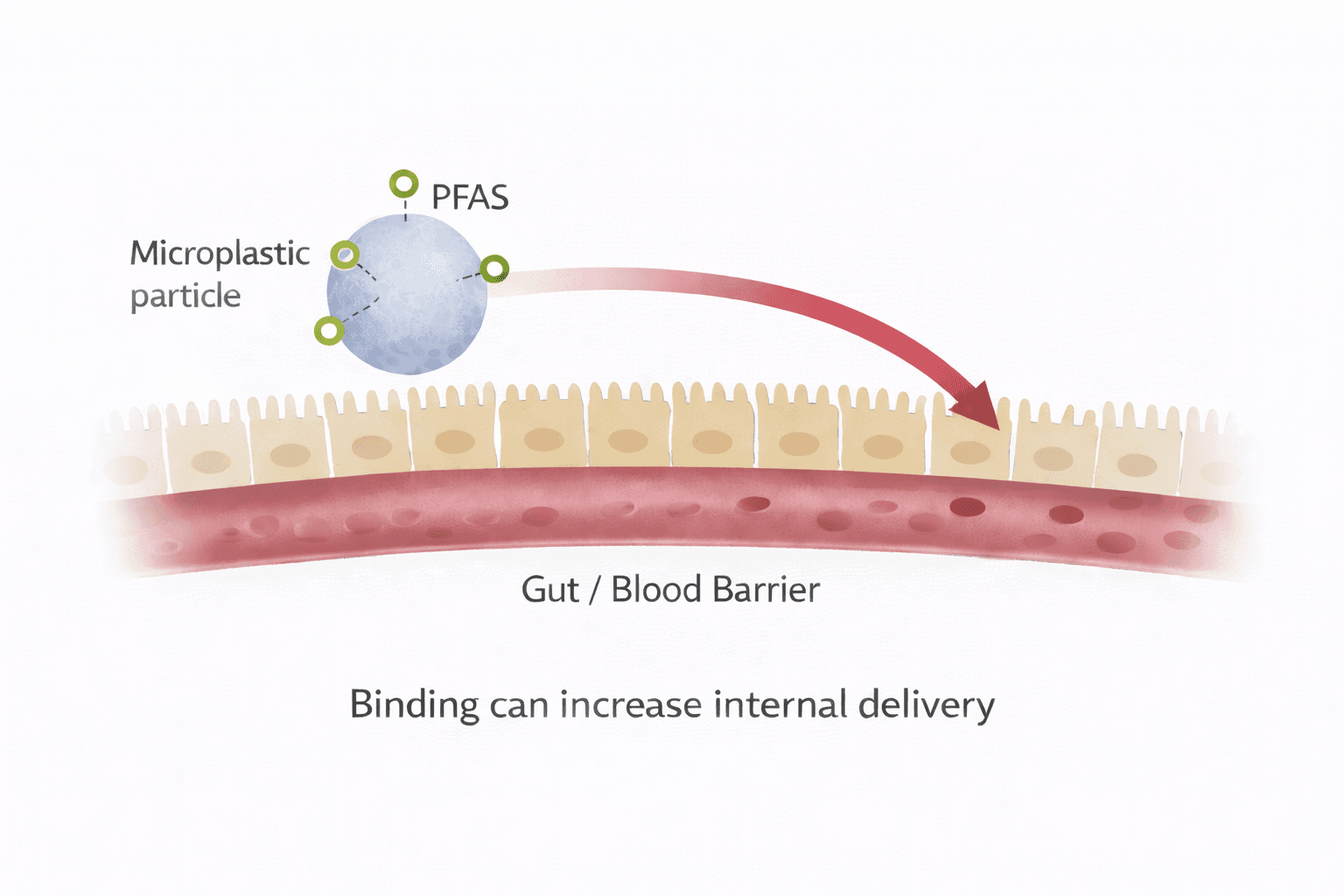
Microplastics and PFAS may not act independently. Research suggests microplastics can bind chemicals on their surface and influence transport and contact time in biological systems.
Mechanisms researchers are concerned about:
- Microplastics bind PFAS on their surface
- Microplastics may transport PFAS across biological barriers
- This may increase intracellular exposure
- This may prolong cellular contact time
This combined exposure model helps explain why measurable effects could occur even when environmental concentrations seem low.
What “Molecular Functional Networks” Means
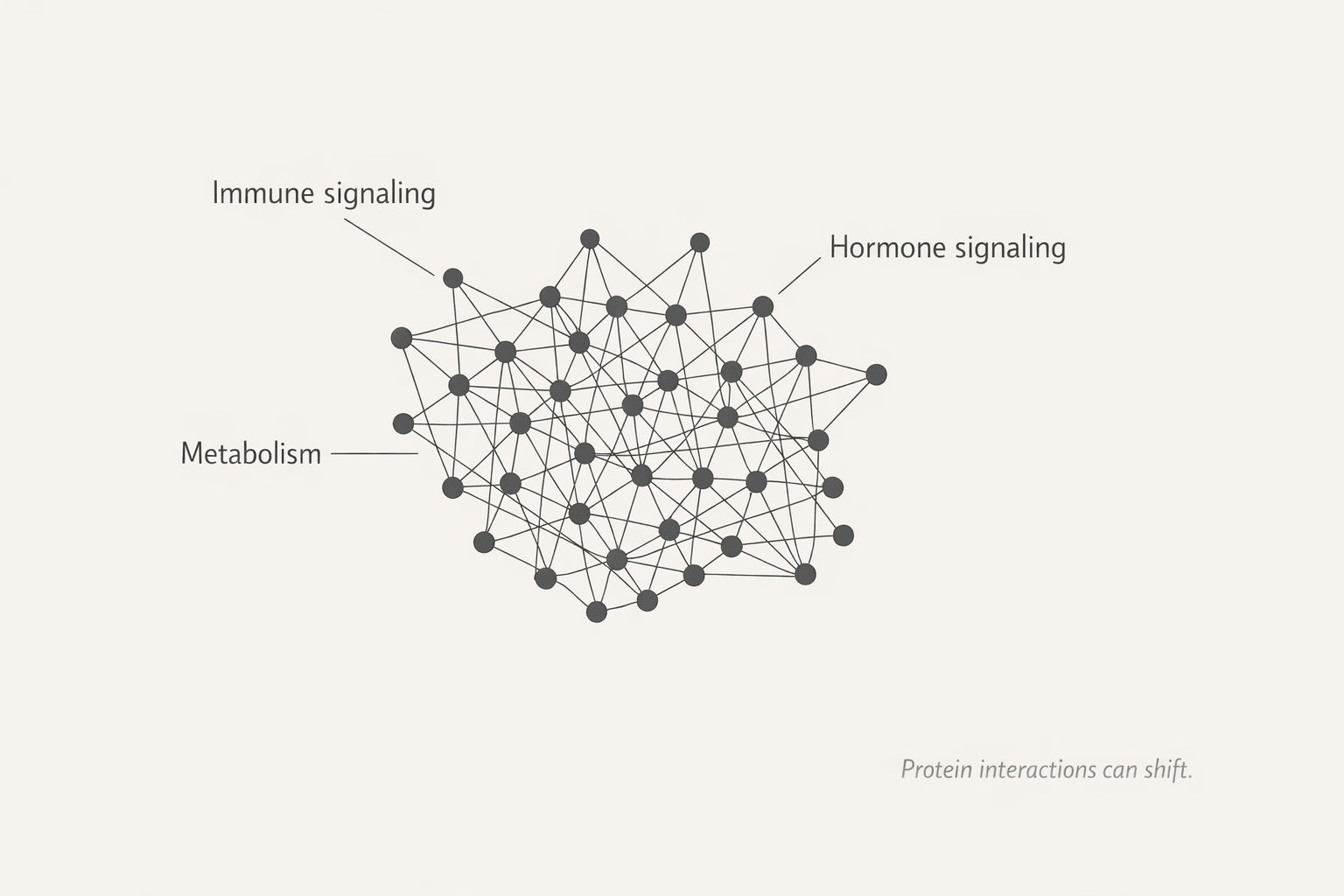
Inside cells, proteins communicate through regulated signaling pathways. These networks coordinate critical functions across the body.
Key processes supported by these networks include:
- Gene expression
- Immune response
- Energy metabolism
- Hormone signaling
The 2023 Cell Reports study reported altered protein–protein interactions consistent with disrupted molecular networks.
Where Exposure Comes From in Daily Life
Many people assume exposure is rare. Common sources include everyday materials and indoor environments.
Primary sources include:
- Drinking water and bottled water
- Food packaging and takeout containers
- Synthetic clothing fibers
- Non-stick cookware
- Indoor dust and air
Microplastics in drinking water have been evaluated in global health discussions, including uncertainty and data gaps.
How to Reduce Microplastics and PFAS Exposure
You do not need perfection. You need reduction.
Practical steps:
- Use glass or stainless steel for food and water
- Reduce non-stick cookware when possible
- Filter drinking water with third-party tested systems
- Wash synthetic clothes less frequently
- Reduce ultra-processed, plastic-packaged foods
Use Oasis to Understand Your Exposure
The Oasis App helps you:
- Identify sources of microplastics and PFAS
- Compare lower-exposure alternatives
- Review contaminant risk data
- Make informed swaps without guesswork
Knowledge isn’t fear, it’s leverage.
Conclusion
Microplastics and PFAS are not always passive passengers in the body. Evidence suggests they can interact with cellular machinery, disrupt molecular networks, and persist long enough to matter.
This isn’t about panic, it’s about informed substitution. By focusing on water, food contact materials, and high-frequency household sources, you can reduce exposure without trying to opt out of modern life.
Explore Lower-Exposure Products
Find products ranked by ingredient sourcing, material safety, and independent contaminant data.
References
- Cell Reports — Microplastics and PFAS disrupt molecular functional networks
- CDC — PFAS Blood Levels in the U.S. Population
- NIH — Health Effects of PFAS Exposure
- Science Advances — Microplastics as chemical carriers
- WHO — Microplastics in Drinking Water
- Environmental Health Perspectives — Endocrine and immune disruption from PFAS