

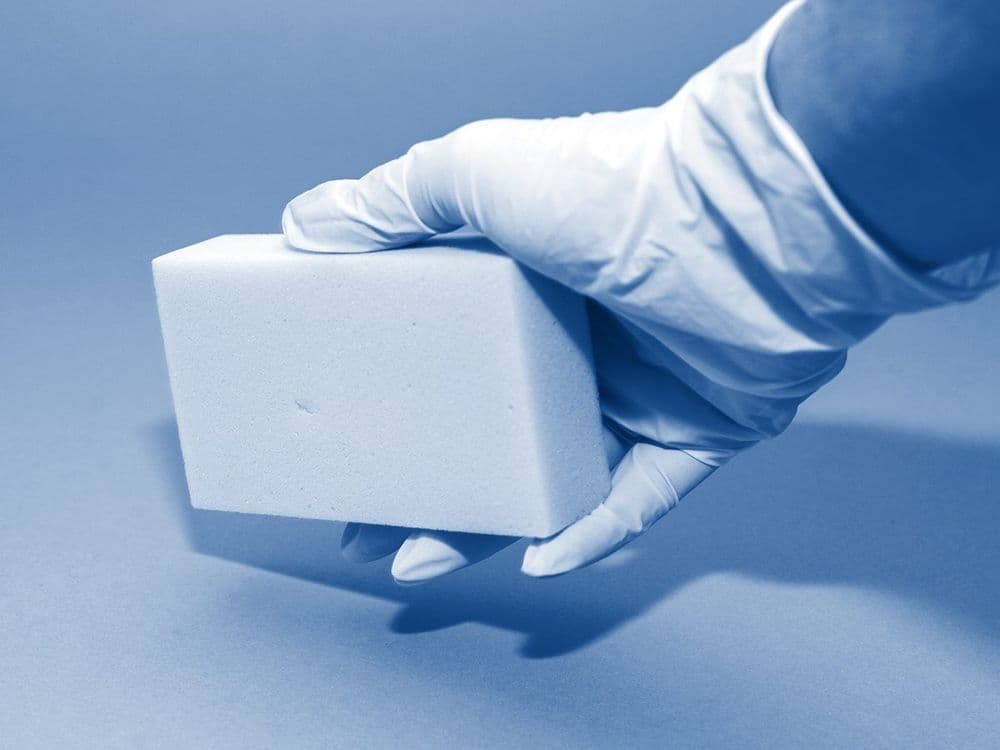
Magic Erasers Release Millions of Microplastics
Magic Erasers are made from foam that sheds microplastic fibers as it wears down
Magic Erasers work because they are abrasive plastic foam, not because they are chemically magic. Research on melamine foam cleaning sponges found that each gram of worn-down sponge can release about 6.5 million microplastic fibers.
That does not prove every household use creates a direct human health risk. It does show that these sponges can shed persistent plastic fibers into homes, drains, surfaces, and the air around cleaning.
What are Magic Erasers made of?
Magic Erasers are usually made from melamine foam, a hard, porous plastic made from melamine-formaldehyde resin.
The foam looks soft, but its microscopic structure acts more like ultra-fine sandpaper. That is why it can lift scuffs, stains, and grime without added soap.
Melamine foam is:
- A thermoset plastic
- Made from melamine-formaldehyde resin
- Abrasive at a microscopic scale
- Designed to break down as it scrubs
- Not biodegradable in any meaningful household timeframe
That wear-down effect is the problem.
The sponge cleans by physically scraping the surface. As it wears away, tiny plastic fibers can break off.
Magic Erasers and microplastics
A 2024 study in Environmental Science & Technology measured microplastic fiber release from melamine foam cleaning sponges.
The researchers found that every gram of abraded sponge released about 6.5 million microplastic fibers.
They also estimated that melamine sponge use could contribute about 4.9 trillion microplastic fibers globally.
That estimate is not a direct measurement of every sponge used worldwide. It is a modeled estimate based on sponge wear, fiber release, and global use assumptions.
Still, the finding is clear: melamine foam can be a major source of microplastic fibers during normal scrubbing.
Why melamine foam sheds so much
Melamine foam has a hard, open-cell structure. When you scrub, those brittle strands rub against the surface and slowly fracture.
That is why the sponge seems to disappear as you use it.
The cleaning power and the shedding come from the same physical process:
- The foam scrapes away marks
- The sponge surface breaks down
- Tiny plastic fibers detach
- Those fibers can move into dust, drains, or nearby surfaces
This is different from a reusable brush or cloth that stays mostly intact during cleaning.
Do Magic Erasers biodegrade?
Melamine foam is a plastic resin, and it is not designed to biodegrade like a natural fiber.
Once the sponge breaks into smaller pieces, those fragments can persist as microplastics. Smaller size does not make the material disappear.
That matters because microplastic fibers are harder to capture, easier to spread, and more likely to move through water and dust.
What animal studies found
A later study tested what happened when Daphnia magna, a small freshwater organism often called a water flea, ingested microplastic fibers derived from melamine cleaning sponges.
The researchers found that the fibers clumped inside the gut and were eliminated more slowly than some other microplastics tested.
In a 21-day chronic exposure study, the melamine sponge-derived fibers caused concentration-dependent harm to survival and reproduction. The study linked the effects to elevated reactive oxygen species, which are tied to cellular stress.
That does not mean the same outcome happens in humans from household cleaning.
It does mean melamine foam fibers are not biologically inert in every setting. At least in this aquatic test system, they were harder to clear and more harmful as exposure increased.
Is melamine dangerous to humans?
Melamine itself has raised toxicology concerns outside of the sponge context.
In 2019, the International Agency for Research on Cancer classified melamine as Group 2B, meaning possibly carcinogenic to humans.
That classification does not mean using a Magic Eraser causes cancer. It means the hazard evidence was strong enough for IARC to place melamine in a category that deserves caution.
Melamine also appears in safety and regulatory databases for other health concerns:
- MilliporeSigma lists melamine with a reproductive toxicity Category 2 classification, including the hazard statement “suspected of damaging fertility or the unborn child.”
- The European Chemicals Agency lists melamine on its endocrine disruptor assessment list.
These classifications are about melamine as a chemical substance, not a direct measurement of risk from scrubbing a countertop once.
The more practical takeaway is simpler: melamine foam is a plastic cleaning material that breaks apart during use, and its base chemistry is not especially comforting.
What this does and does not prove
The strongest evidence is about shedding.
The 2024 sponge study directly measured microplastic fiber release from melamine foam. The Daphnia study directly tested biological effects in a freshwater organism.
The evidence does not prove:
- How much humans inhale during normal household cleaning
- How much remains on food-contact surfaces
- Whether occasional use creates measurable human health harm
- Whether every brand sheds the exact same amount
But the evidence does show enough to question routine use, especially on surfaces that touch food, baby items, cookware, or anything likely to go down the drain.
Better alternatives to Magic Erasers
You do not need melamine foam for most household cleaning.
For everyday messes, use lower-shedding options first:
- A natural fiber brush for dishes and surfaces
- A cellulose sponge or washable cotton cloth
- Baking soda mixed with water into a paste
- Castile soap or mild dish soap
- A soft scrub brush for textured surfaces
- Vinegar solutions only where safe for the surface
Baking soda works especially well for scuffs and grime because it adds gentle abrasion without plastic foam shedding.
Avoid using vinegar on natural stone, unfinished grout, or delicate finishes.
Buyer Checklist
- Avoid melamine foam for routine cleaning, especially on food-contact surfaces.
- Use baking soda paste for scuffs, stains, and gentle abrasion.
- Choose natural fiber brushes, cellulose sponges, or washable cloths when possible.
- Do not assume a sponge is safer because it does not use added cleaner.
- Replace disposable scrubbers with durable tools that do not visibly break down during use.
Check the latest on cleaning products
Find the healthiest cleaning products ranked and reviewed using the latest lab data, toxicology, and environmental health research.
References
IARC Publications — Some Chemicals That Cause Tumours Of The Urinary Tract In Rodents