

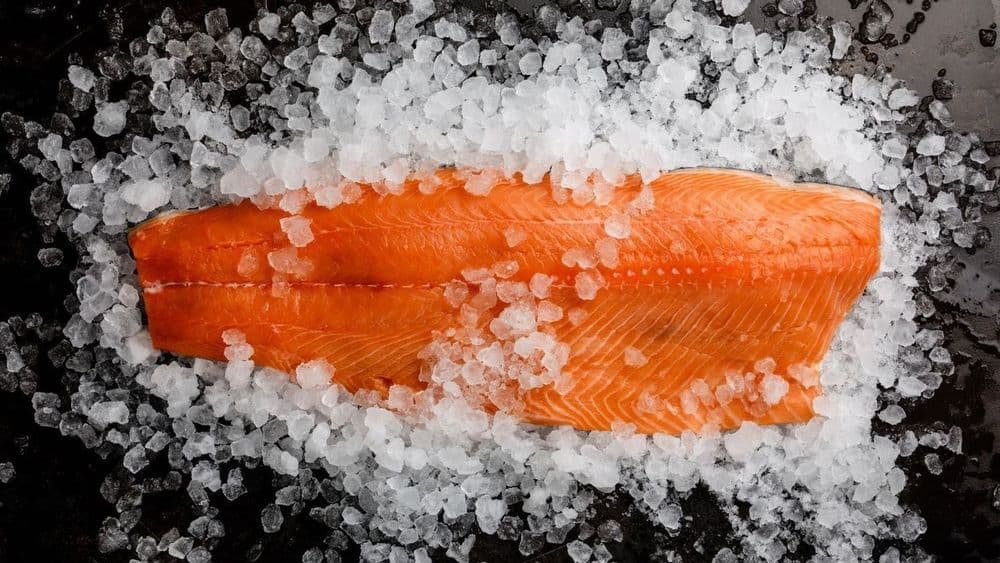
Farmed Salmon PCBs Is Higher Than Wild Salmon
See PCB data for farmed salmon, risks, guidance, plus smarter wild choices soon.
What matters most in salmon quality is not omega 3 content. It is contaminant load, especially persistent chemicals like PCBs that build up in fat. Retail testing has shown that farmed salmon can carry dramatically higher levels than wild, driven largely by feed composition and farming practices.
That difference points to a meaningful exposure gap, but it also needs context. Higher PCB levels are a risk signal, not a direct outcome, and exceeding regulatory screening values Does Not Guarantee disease. What it does suggest is that sourcing matters more than most labels imply, especially for people who eat salmon frequently.
Buyer Checklist
- Choose wild-caught salmon over farmed when possible.
- Look for Alaska wild salmon, which is largely prohibited from aquaculture.
- Limit frequency of farmed Atlantic salmon consumption if concerned about PCB exposure.
- Use independent seafood testing data to compare brands.
- Check updated toxicology benchmarks, not just marketing labels.
Farmed Salmon PCB Levels vs Wild Salmon
A landmark retail analysis published in Science in 2004 tested salmon purchased from major U.S. cities and found large differences in PCB contamination.
Researchers analyzed about 700 samples sourced from North America, Europe, and Chile.
Key findings:
- Farmed salmon contained about 16 times higher PCB concentrations than wild salmon.
- Farmed salmon had roughly 4 times higher PCB levels than beef.
- European farmed salmon showed the highest concentrations.
- Contamination varied by farming region and feed composition.
These were real retail samples, meaning the results reflect what consumers were actually buying and eating.
What Are PCBs and Why Do They Matter?
Polychlorinated biphenyls are industrial chemicals used from 1929 until they were banned in the United States in 1979.
They persist in the environment and accumulate in living organisms, especially in fat.
Health concerns linked to PCB exposure include:
- Classification as probable human carcinogens by multiple agencies.
- Immune system suppression, particularly in early development.
- Endocrine disruption affecting hormones and metabolism.
- Associations with insulin resistance and metabolic disorders.
- Ability to cross the placenta and enter breast milk.
Because salmon is a fatty fish, it can concentrate fat soluble pollutants from both feed and the marine environment.
Did Farmed Salmon Exceed Safety Limits?
The study compared PCB levels against U.S. Environmental Protection Agency risk based screening values.
Results showed:
- About 90 percent of farmed salmon samples exceeded the EPA screening value for unrestricted consumption.
- Some samples exceeded the threshold by up to 4.5 times.
- Estimated lifetime cancer risk increased under high consumption scenarios.
Important context:
- These thresholds are not bans. They are risk based guidance tools.
- Exceeding them Does Not Guarantee harm.
- They reflect incremental risk over long periods of frequent exposure.
The Best Signal here is relative exposure. Farmed salmon consistently tested higher than wild.
Has U.S. Guidance Been Updated?
Federal PCB tolerance levels for fish were established in 1984.
Since then:
- Detection methods have become far more sensitive.
- Cancer risk models for PCBs have been revised upward.
- Large scale U.S. retail testing at similar scope has not been repeated.
This creates a Default Assumption problem. Regulatory thresholds may not fully reflect modern toxicology or cumulative exposure patterns.
Farmed Salmon and Weight Gain Research
Animal studies have explored how contaminants in farmed salmon may affect metabolism.
In a controlled PLoS One study:
- Mice fed farmed salmon gained about twice as much weight as those fed wild salmon.
- They showed higher markers of insulin resistance.
- They accumulated more visceral fat.
Researchers proposed that persistent organic pollutants may disrupt mitochondrial function and hormone signaling.
This does not prove the same effect in humans, but it provides a plausible biological mechanism.
Why Farmed Salmon Has Higher PCB Levels
The primary driver is feed composition.
Farmed salmon are typically fed concentrated fish meal and fish oil derived from smaller marine species.
Contamination pathways include:
- Biomagnification, where pollutants increase at each level of the food chain.
- Concentration in fatty tissues.
- Transfer from feed into farmed fish.
Wild salmon eat a more varied diet and migrate through open ocean environments, which can dilute exposure.
Wild Caught vs Farmed Salmon: What To Choose
If reducing contaminant exposure is your goal, wild salmon is the more consistent option based on available data.
Key differences:
- Wild salmon generally has lower PCB levels.
- Farmed salmon tends to have higher fat content.
- Omega 3 content can be similar, but fatty acid profiles differ depending on feed.
Alaska wild salmon is often preferred because commercial aquaculture is largely restricted in those waters.
Practical Recommendations
If salmon is a regular part of your diet:
- Prioritize wild caught varieties when available.
- Rotate different seafood types to reduce cumulative exposure.
- Limit frequent intake of farmed Atlantic salmon.
- Monitor independent testing data when available.
Seafood remains a nutrient dense protein source with strong cardiovascular benefits. The goal is not avoidance, but smarter sourcing.
Check the latest on seafood
Find the healthiest Seafood ranked and reviewed using the latest lab data, toxicology, and environmental health research.
References
Science — Global Assessment of Organic Contaminants in Farmed Salmon
U.S. Environmental Protection Agency — Polychlorinated Biphenyls (PCBs) Overview
U.S. Food and Drug Administration — PCB Tolerances in Food
National Institute of Environmental Health Sciences — Polychlorinated Biphenyls (PCBs)
PLoS One — Dietary Pollutants and Metabolic Effects in Mice Fed Farmed Salmon