

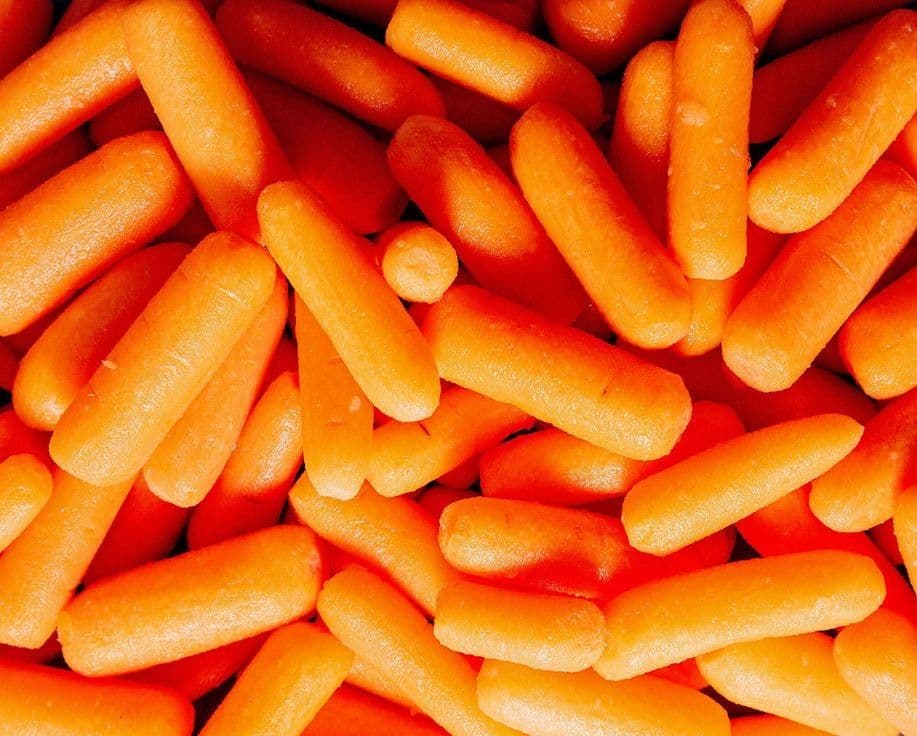
Are Baby Carrots Washed in Chlorine?
Most baby carrots are sanitized in chlorinated wash water before packaging.
The most overlooked detail about baby carrots is not their size. It is the fact that they are peeled, cut, and exposed to industrial wash systems that change how they interact with water and chemicals. Once the protective outer layer is removed, cut produce absorbs more wash solution, and that includes any sanitation agents used during processing.
Food safety protocols rely on chlorine to reduce harmful bacteria, and this is Legally Required in many large scale facilities. That does not automatically translate to risk, but it also Does Not Guarantee that residues behave the same way as they would on intact produce. The key distinction is between surface sanitation, what is measured in rinse water, and what may diffuse into plant tissue.
Buyer Checklist
- Look for whole carrots instead of cut baby carrots if you want produce with intact protective skin
- Ask farmers or produce suppliers how vegetables are washed and processed
- Choose organic or local produce when transparency about processing matters to you
- Wash produce thoroughly at home even if it has been prewashed
- Store carrots properly to maintain freshness and reduce spoilage
What Are Baby Carrots
Baby carrots are not immature vegetables. They are cut and shaped from larger carrots that would otherwise be discarded due to irregular shape.
The concept was introduced in 1986 as a way to reduce food waste and improve profitability.
Key industry facts:
- Roughly 70 percent of carrot sales in the United States are baby carrots
- Production is dominated by a small number of large producers
- Processing includes cutting, peeling, and mechanical polishing
Why Baby Carrots Are Washed in Chlorine
Fresh produce can carry bacteria such as E. coli, Listeria, and Salmonella. Industrial processors use antimicrobial rinses to reduce this risk.
Typical sanitation conditions:
- Chlorine levels between 75 and 200 ppm during washing
- Federal regulations allow up to 200 ppm for food contact sanitizing solutions
- Final rinse water often contains about 2 to 7 ppm chlorine
This step is considered Legally Required for many facilities because it reduces the risk of foodborne illness during large scale handling.
The slight smell sometimes noticed when opening a bag can come from trace chlorine compounds in the packaging environment.
Why Peeled Produce Absorbs More Wash Water
Whole vegetables have a natural outer layer that acts as a barrier. This layer slows water movement and limits chemical penetration.
Once removed, the internal tissue is more exposed.
Research on postharvest washing shows:
- Cut vegetables absorb more liquid than intact ones
- Smaller pieces increase total surface area and absorption
- Removing skin increases diffusion into edible tissue
A controlled study examining chlorate uptake found:
- Peeled carrots absorbed significantly more chlorate than intact vegetables
- Uptake increased as cut size decreased
- Residues were detected inside the tissue, not just on the surface
Chlorine Byproducts That Can Form During Washing
Chlorine reacts with organic compounds naturally present in vegetables. This can produce secondary chemicals during sanitation.
Common byproducts observed in research:
- Chlorate
- Chlorite
- Trihalomethanes
An industrial scale study found:
- Chlorine-treated wash water around 80 mg/L generated measurable trihalomethanes
- Some levels exceeded drinking water limits in the wash solution itself
- Alternative sanitizers like peracetic acid produced fewer byproducts
Monitoring is typically done in water, which means those measurements Does Not Guarantee the same levels inside produce tissue.
Chlorine Washing Is Common Across the Food Industry
Baby carrots are not unique in undergoing this process. Similar sanitation methods are widely used across fresh and processed foods.
Common examples:
- Packaged salad greens
- Cut broccoli and cauliflower
- Precut fruit
- Poultry processing lines
Even organic products may undergo chlorine washing within regulated limits when needed for food safety.
What This Means for Consumers
Sanitation practices are designed to reduce microbial risk, which can be severe if left uncontrolled. This is the primary reason chlorine is used.
Key context:
- Chlorine reduces bacteria on food surfaces
- Chemical byproducts can form during washing
- Cut produce may absorb more wash solution than intact produce
These findings do not prove harm from typical consumption. They highlight how processing changes the way produce interacts with sanitizing systems.
Alternatives if You Prefer Minimally Processed Produce
Some consumers prioritize lower processing and fewer industrial steps. In that case, choosing intact produce is the simplest shift.
Options include:
- Whole carrots with skin intact
- Farmers market produce with shorter supply chains
- Washing vegetables at home with clean water
Whole carrots retain their outer layer, which acts as a natural barrier and also contains additional fiber and micronutrients.
Check the latest on Produce
Find the healthiest produce ranked and reviewed using the latest lab data, toxicology, and environmental health research.
References
Priceonomics — The Invention of the Baby Carrot
Ohio State University Extension — Chlorinated Water Sanitation of Leafy Green Vegetables